Inclusive Counselling Philosophy
A Safe, Respectful, and Affirming Space for All
A Space Where Everyone Is Welcome
Your experience matters. Your story belongs. You do not need a diagnosis, crisis, or label to seek support. Some people come to therapy because they are struggling deeply; others come because they want clarity, growth, or support through a transition. All are equally valid.
We work with individuals, couples, and families from all walks of life, across cultures, faiths, races, genders, sexual orientations, relationship structures, neurotypes, abilities, ages, and life experiences. Some arrive confident and reflective; others arrive unsure, overwhelmed, or simply curious. Our intention is to create a space that feels calm, respectful, and emotionally safe, where you can speak freely, pause when needed, and be met with steady attention rather than judgement.
Therapy Beyond Stigma: From Illness to Wellness
Not everyone needs therapy, and yet almost everyone can gain from it.
Mental and emotional health is not merely the absence of illness. In the same way that physical health is about vitality and balance, emotional wellbeing is about awareness, resilience, connection, and choice. Therapy is not only for when something has gone wrong; it can also be a space to slow down, reflect, and notice what is happening within and around you.
Many people already practise emotional first aid. We talk to friends, reflect, pray, journal, exercise, or take quiet walks. These are valuable and often enough. Therapy does not replace these it complements them by offering a dedicated space to listen more closely to your thoughts, your emotions, and the signals from your body.
The Value of Professional Support
When something truly matters, we often turn to trained professionals. Many people know how to cook, yet still value a skilled chef. We may manage basic fitness on our own, but a coach refines form and prevents injury. We know first aid, but we still consult a doctor when health becomes complex.
Therapy offers that same level of professionalism in emotional and relational life. It brings training, perspective, and structure, not to take over your life, but to support it with care and skill, helping you notice patterns, feel emotions more safely, and respond with greater choice rather than habit.
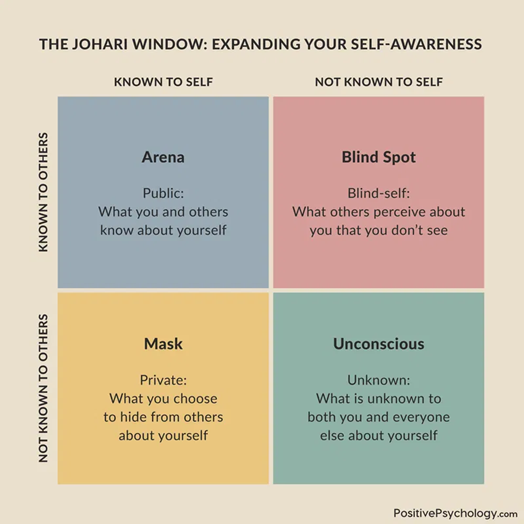
Awareness, Blind Spots and the Johari Window
One reason therapy can be helpful is that we all have blind spots.
A simple way to understand this is through the Johari Window, which shows how some parts of ourselves are known, some are private, and others remain unknowingly outside our awareness. Many difficulties persist not because we are weak or unwilling to change, but because we genuinely cannot yet see certain patterns , in how we react, how we relate, or how our bodies respond under stress.
Therapy gently expands awareness. It offers a reflective space where blind spots soften, understanding deepens, and new choices become possible often through small moments of noticing, naming, and making sense of what you are feeling in the moment.
How This Relates to Therapy and Everyday Life?
The Johari Window reminds us that growth often happens in four directions:
1. Expanding the Open Area (Arena)
This is what both you and others are aware of, your thoughts, feelings, and behaviours that are already visible. Therapy helps expand this area by improving emotional awareness and communication. For example, you may become clearer about what you are feeling and better able to express needs instead of reacting in frustration or silence.
2. Reducing Blind Spots
These are patterns others may notice but you may not, such as how you shut down during conflict, become overly self-critical, or avoid closeness. Through reflection and gentle feedback, therapy helps bring these into awareness, so they become choices rather than automatic reactions.
3. Gently Opening What Has Been Hidden
This area includes feelings or experiences you may keep private, such as fear, shame, grief, or vulnerability. Therapy offers a safe, respectful space where you can decide what and when to share, often reducing isolation and allowing for more authentic connection with others.
4. Creating Space for Growth and New Possibilities
Some aspects of ourselves are not yet known because we have never had the opportunity, support, or safety to explore them. Therapy helps people develop new emotional skills, healthier ways of relating, and greater self-confidence , opening up possibilities that may not have felt available before.
Together, this process is not about being analysed or exposed, but about expanding understanding, increasing choice, and strengthening emotional capacity, at a pace that feels safe and respectful.
Education Teaches Us How to Work - Not Always How to Relate
Education helps us become financially independent and intellectually capable, and for that we are grateful. Yet very few of us are formally taught how to navigate emotions, conflict, attachment, loss, or repair. Most emotional pain arises not in isolation, but in relationship, with partners, children, family members, colleagues, or communities. These struggles are often felt not only in our thoughts, but also in our bodies, as tension, heaviness, restlessness, or a sense of being on edge.
Parenting, for example, is often learnt through trial and error. Some approaches rely on shouting, scolding, shaming, or punishment. These may bring control or compliance, but they rarely foster emotional safety or inner alignment. True growth comes from congruence, when what we think, feel, and do are more closely aligned. Therapy supports this process by helping people understand themselves and one another more clearly, regulate emotions more safely, and build relationships rooted in connection rather than fea
Inclusivity as a Lived Practice
Inclusivity is not a slogan for us. It is a lived and ongoing practice. People come shaped by culture, faith, family history, social context, and lived experience. Some have felt unseen, misunderstood, or judged elsewhere. Others may be exploring parts of themselves they have never had space to name.
Our commitment is to offer therapy that is respectful, affirming, and ethically grounded, while remaining curious, humble, and open to learning. This is a shared learning space, where we learn from and with one another, and where difference is met with interest rather than assumption. We also pay attention to pace, comfort, and emotional safety, checking in when conversations feel heavy, allowing space for silence, and supporting clients to stay within what feels manageable.
From this foundation, we hold a simple but powerful belief: Emotions are not enemies. They are signals, guides, and messengers, inviting understanding rather than suppression. You can read more about how this belief shapes our work on our Counselling Philosophy page.
Why Choose Listening Ear Counselling & Consultancy Clinic?

Holistic, One-Stop Support

Personalised, Evidence-Based Care

Culturally Attuned & Gender-Sensitive

Expertise Across Life Stages
